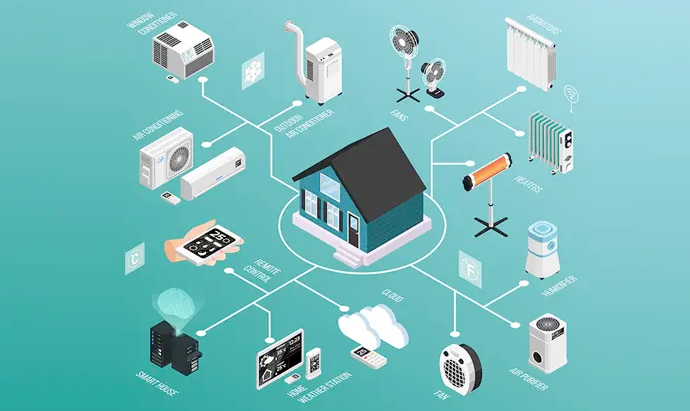
IoT connects smart devices by creating a mesh of interoperable hardware and protocols that enables data exchange and coordinated actions. Edge processing reduces latency and protects privacy, while standardized interfaces support diverse devices and networks. Security-by-design and ongoing risk assessment guard data flows. Real-world deployments in homes and workplaces show autonomous reconfiguration and scalable analytics, with systems that improve over time. The result is a network that quietly reshapes how environments respond and adapt, inviting deeper consideration of future implications.
What IoT Connectivity Actually Enables for Devices
IoT connectivity enables devices to exchange data, coordinate actions, and operate with greater intelligence than isolated hardware. This integration lowers edge latency by enabling near-instant decisions at the device edge, reducing dependency on central servers.
It supports energy harvesting strategies, extending uptime in remote or autonomous systems while enabling adaptive workloads and resilient operation across distributed networks.
See also: techfastest
How Devices Talk: Protocols and Standards That Power Interoperability
Devices exchange data and commands through a structured ecosystem of protocols and standards that ensure reliable, interoperable communication across heterogeneous hardware and networks. Interoperability protocols enable devices to understand each other regardless of maker or environment, while device standards define common interfaces and data formats. This alignment accelerates integration, reduces bespoke effort, and fosters open collaboration, supporting flexible, scalable IoT ecosystems.
Keeping Your Smart Ecosystem Safe: Security and Privacy in Practice
Security and privacy are foundational to a trustworthy smart ecosystem. Organizations must establish a robust security posture, embedding safeguards across devices, networks, and data flows. Privacy by design minimizes exposure, enabling informed consent and selective data sharing. Continuous risk assessment, transparent incident response, and downstream accountability ensure resilience, while users retain freedom to manage permissions and monitor activity.
Real-World Patterns: Architecting Homes and Workplaces That Learn and Adapt
Growing homes and workspaces increasingly rely on intelligent systems that observe usage patterns, anticipate needs, and adjust parameters in real time. Real-world implementations reveal modular architectures where edge devices process data locally, reducing latency and preserving privacy. Adaptive workflows emerge, enabling systems to reconfigure tasks autonomously.
Architectures emphasize interoperability, scalable analytics, and fault tolerance, supporting learning environments that optimize comfort, efficiency, and user freedom.
Frequently Asked Questions
How Do I Choose the Right Iot Device for My Needs?
The device should be chosen by how to match features with needs, balancing Budget vs. features trade offs; assess compatibility, security, and scalability, then compare ecosystems. Freedom-seeking readers prefer clear criteria, practical tests, and future-proof options.
What Is the Typical Cost of Deploying Iot at Home?
The typical home IoT deployment costs vary, but are often $100–$500 upfront plus ongoing expenses; cost comparison matters. Privacy considerations arise from data collection, device sharing, and cloud services, shaping prudent budgeting for a freedom‑seeking, analytical user.
Can Iot Devices Work Offline or Without Internet?
In offline operation, some IoT devices can function locally, like a smart thermostat maintaining climate without internet. However, this limits data sharing and updates; security considerations remain, as local storage can still be vulnerable.
How Does Data Ownership Work in Smart Homes?
Data ownership in smart homes varies by vendor, user rights, and local law; privacy implications arise from continuous data collection, while data governance determines who can access, store, and share information. Device interoperability can complicate or constrain ownership rights.
What Happens When Iot Devices Fail or Become Obsolete?
When IoT devices fail or become obsolete, the analysis notes device failure implications include data access disruption and security gaps; obsolescence mitigation involves gradual replacement, firmware updates, standardized interfaces, and vendor support to preserve function and autonomy.
Conclusion
IoT weaves devices into a coordinated mesh, enabling near-instant decisions at the edge and scalable, privacy-conscious analytics in the cloud. Juxtaposing seamless automation with persistent risk highlights a paradox: increased comfort and efficiency often come with expanded attack surfaces. Yet standardized protocols and security-by-design approaches push resilience forward, turning potential vulnerabilities into managed priorities. The result is a living ecosystem that learns and adapts, delivering smarter environments while continuously reassessing danger and strengthening safeguards.
